About Unmanned & Autonomous Systems (UAS, Drones and UGVs)
An Unmanned Aerial Vehicle (UAV) is a mission-critical aerial platform designed to operate without an onboard pilot. UAVs conduct operations through secure remote control, semi-autonomous, or fully autonomous modes, supported by hardened command-and-control systems, encrypted data links, onboard flight computers, and mission-specific payloads. These platforms are engineered for reliable performance in contested, denied, and high-threat operational environments.
Unmanned systems have become integral to modern military operations, particularly for missions that are dull, dirty, dangerous, or denied, where the employment of manned platforms exposes personnel to unacceptable risk. UAS and UGVs provide persistent presence, rapid deployment, reduced logistical burden, and the ability to operate deep inside hostile or inaccessible areas. Their roles span border and maritime surveillance, battlefield reconnaissance, internal security operations, disaster response, and search-and-rescue missions, delivering commanders enhanced operational flexibility and situational awareness.
High Altitude Areas (HAA) impose severe operational constraints, including reduced air density, extreme temperatures, strong winds, and limited infrastructure. Unmanned systems deployed in such environments must demonstrate reliable lift generation, propulsion efficiency, navigation accuracy, and communication resilience. UAV operations in HAA are critical for mountain warfare, border surveillance, ISR, and logistics support in remote and infrastructure-constrained regions.
Unmanned platforms configured for HAA benefit from optimized aerodynamics, efficient propulsion, and mission-adaptive payloads. ICE-operated UAS offer distinct advantages in these environments due to superior endurance, consistent performance in sub-zero temperatures, and reduced dependence on battery efficiency. Rotary Wing UAVs further enhance HAA operations by enabling VTOL, hover, and precision low-speed flight, supporting ISR and limited resupply missions in mountainous terrain and forward high-altitude posts.
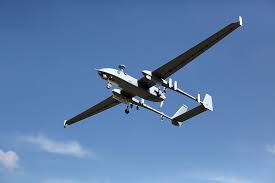
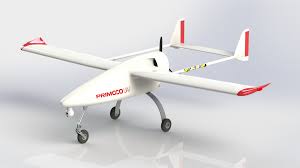
Intelligence, Surveillance, and Reconnaissance (ISR) remain the foundation of battlefield and operational dominance. ISR-configured fixed-wing and rotary-wing UAVs provide persistent situational awareness through electro-optical, infrared, and multi-sensor payloads. These systems enable early threat detection, pattern-of-life analysis, and real-time intelligence dissemination, supporting commanders and decision-makers with accurate, time-sensitive information across tactical and strategic levels.
For close-range and high-intensity tactical missions, First Person View (FPV) UAVs offer high maneuverability and direct visual control. FPV platforms are employed for tactical ISR, precision engagement, and Kamikaze (loitering munition) roles, enabling accurate target acquisition and terminal guidance in complex operational environments. Such systems are increasingly relevant in contested electromagnetic and terrain-constrained battlefields.
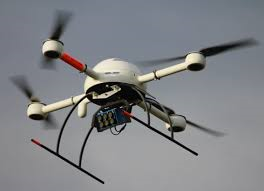
Rotary Wing UAVs address operational requirements where vertical take-off and landing, hover capability, confined-area operation, and precise low-altitude flight are essential. These platforms are particularly effective in mountainous terrain, urban environments, forested regions, ship-borne operations, and forward operating bases, where runway-dependent systems are impractical.
Where continuous overwatch is required, tethered UAV systems, typically rotary-wing based, provide sustained airborne operation through ground-based power supply and secure data transmission. These systems act as force multipliers for perimeter security, border observation posts, forward operating base protection, urban surveillance, and critical infrastructure defence, delivering persistent visibility and reliable communications over extended durations.
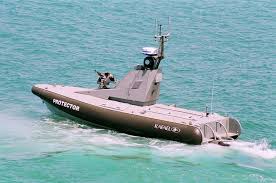
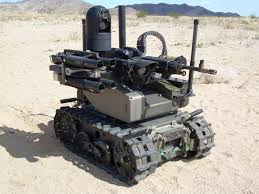
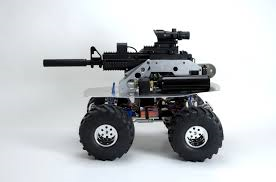
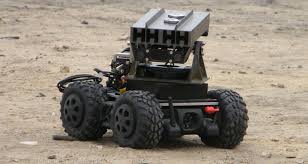
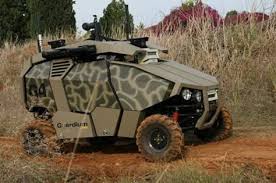
Modern unmanned operations also rely on Unmanned Ground Vehicles (UGVs) with heavy mobility and ruggedized construction. Designed for operation across rough terrain, snowbound regions, high-altitude passes, and urban combat zones, UGVs support forward reconnaissance, ISR payload deployment, logistics resupply, perimeter security, and force protection tasks, significantly reducing personnel exposure in high-risk scenarios.
India's accession to the Missile Technology Control Regime (MTCR) represents a strategic milestone in the nation's unmanned and aerospace capability. Under the leadership of Hon'ble Prime Minister Shri Narendra Modi, India has strengthened its position among technologically advanced nations, enabling controlled development, secure collaboration, and global compliance in unmanned systems and associated technologies.
We currently provision NDAA-compliant ISR FPV drones and critical drone components, free of Chinese-origin parts. These systems support tactical ISR, precision FPV, and Kamikaze roles, with emphasis on reliability, electronic-warfare resilience, and rapid deployment. FOG-D / OFC-guided capabilities are under active development and evaluation as part of our phased capability enhancement roadmap.
BSS Materiel Limited collaborates with globally experienced partners such as FLIGHTECH Systems and ADUSEA Inc. (Advanced Unmanned Systems, Engineering & Aerospace, USA). These collaborations combine international aerospace expertise with indigenous capability to support present operational needs while enabling future system evolution. For more information ADUSEA Inc.
A detailed NDAA-compliant product catalogue, free of Chinese-origin components, covering our FPV drones, Tactical ISR UAVs, and Tethered UAS, is available on this page for reference and procurement.

Contact
- ABYSSAL, AltF 101, 5th Floor, NH-19 Mathura Road, New Delhi, India-1100 44
- email@bssm.limited
© 2016 BSS Materiel Limited. All Rights Reserved